10 July 2021

Letter to an American


Dear Prof. Richardson:


I have been following your “Letters from an American” with interest for several months. I have read How the South Won the Civil War and look forward to reading more of your work on the Reconstruction in the future. I share your concern about the oligarchic trend in US politics and the Trumpist/white nationalist/fascist threat to our republican institutions. One must be judicious with the expression “Big Lie”, considering its origin, but I think your application of it to Trumpist disinformation is fair.


But there is another “Big Lie” that has been popular among the academic left for decades, one which you yourself have promoted unabashedly. That is the idea that the relationship between women and men in the US is essentially analogous to the relationship between blacks and whites. I don’t see how anyone can believe this after 2020.


I could cite government statistics and talk about all the areas in which the analogy of women:men::black:white doesn’t hold: life expectancy, educational attainment, incarceration, workplace death, etc., and I could talk about the way liberal feminists have prioritized the concerns of middle-class white women over the needs of African-Americans and the poor. I’m not going to bother because I’m confident that you know all that. (I’ve included some links below anyway for interested readers; scroll down to "Statistics: comparing race and sex".) 


You know all that, yet you talk as if the post-Vietnam progressive coalition, of which feminists and African-Americans are key constituencies, has been part of American society since the founding of the nation. The current leftist politics of identity and demonization of cisgendered straight white males are problematic enough when applied to our own times, yet you seem to interpret all of US history according to the terms of this ideology. 


Here is a recent example:


[The Civil War] had changed the idea of who should have a say in American society. Before the war, the ideal citizen was a white man, usually a property owner. But those were the very people who tried to destroy the country, while during the war, Black Americans and women, people previously excluded from politics, gave their lives and their livelihoods to support the government. ("Letters from an American", 1 July 2021.)


More facts that you know perfectly well: All states had eliminated the property qualification for suffrage before the Civil War; the Civil War killed over 618,000 Americans, the great majority of whom were white males; most of the officers on both sides came from the propertied classes. While it would be fair to blame Southern planter oligarchs for dragging the country into war, white male property owners also led the defense of the Union. African Americans supported the Union to the extent that they could, but I have no idea what you are alluding to when you say that “Black Americans and women . . . gave their lives and their livelihoods to support the government”; no reasonable sense of that predicate can be applied unequivocally to both of those subjects.


Throughout your work, you portray white women as either passive victims dragged along by white men as they dominated everyone else, or as actively joining minorities in the struggle for justice. This portrayal is almost cartoonish in its distortion and oversimplification. Power is distributed in the US primarily on the basis of socioeconomic class and secondarily on the basis of race, not sex/gender. Women who have had access to advantages based on class and race have generally not hesitated to enjoy them to the fullest and have at times fought to maintain them. You seem to suggest that women have generally fought for social justice against individualism, racism, and capitalism, and this is plainly not accurate. I have learned much from your work, but when I see the extent to which your interpretations are driven by a contemporary agenda, I do not know whether I can trust the conclusions you draw.


Maybe we both would benefit from re-reading Paula Giddings’s When and Where I Enter.


Respectfully,


M. D. Robertson


Image credit: Adam Jones, Ph.D. - Own work, CC BY-SA 3.0, https://commons.wikimedia.org/w/index.php?curid=22198182

For the sake of sensitive readers, I have obscured the racial epithet that appears in this photo. 


Statistics: comparing race and sex


Of all the areas listed below, the analogy white:black::men:women holds in only two areas: suicide and wages. In most of these areas, whites are better off than blacks, but women are better off than men. 


Life expectancy

In 2018, the overall expectation of life at birth

was 78.7 years, increasing from 78.6 in 2017. Between 2017

and 2018, life expectancy at birth increased by 0.1 year for

males (76.1 to 76.2) and females (81.1 to 81.2). In 2018, life

expectancy at birth was 81.8 for the Hispanic population, 78.6

for the non-Hispanic single-race white population, and 74.7 for

the non-Hispanic single-race black population.

CDC NVSS 2017 data (pub. 17 Nov 2020)


Life expectancy at birth, in years:

Hispanic females 84.3

All females 81.2

White females 81.1

All Hispanics 81.8

Hispanic males 79.1

All         78.7

All whites     78.6

Black females 78.0

All males         76.2

White males 76.2

All blacks     74.7

Black males 71.3


See also Living Longer: Historical and Projected Life Expectancy in the United States, 1960 to 2060


Analysis by socioeconomic status 


“When did women start to outlive men” 


Education

Postsecondary

High school dropout rates


Earnings

By race and sex

By sex and occupation

The above link states that women make 81% of what men make, in aggregate, and also breaks it down by occupation. Note that this only compares people who are employed. It doesn’t take into account those who are unemployed, incarcerated, in the military, or have left the workforce. Other relevant considerations: men are judged by their earning power to a greater degree than women and are under more social pressure than women to compete for higher paying positions. Men are less likely to take time off after the birth of a child.


43% of American workers are women. Why is this figure so low, when there are more women than men in the US, and more men than women are incarcerated or in the military? A likely answer: More men than women are supporting a stay-at-home partner of the opposite sex. 


Suicide


Incarceration


Unemployment


Workplace fatality


Homelessness


22 June 2021

Pro-Conscience revisited

My position on abortion is what I call "pro-conscience", which I outlined in this piece. The core ideas are

  • People can disagree in good faith about the moral status of the unborn at the earliest stages of pregnancy. In the absence of agreement, the law must respect freedom of conscience.
  • Past a certain point, however, the unborn deserve the benefit of the doubt and the protection of the law.
  • Within constitutional limits, moral disagreements should be resolved by democratic processes, not judicial fiat.

I have long wanted to return to this topic and develop my ideas further, but I have been unable to answer several related questions to my satisfaction:

How do we define the "earliest stage of pregnancy", in which the issue can be left individual conscience to decide, and the later stage at which the state must protect the unborn? I suggested 9 weeks in my earlier piece, based on developmental milestones, but I would like to have a firmer ground to stand on. 12 weeks after conception is the limit for elective abortions in some European countries (10 weeks in Portugal). This doesn't solve the question in principle but it could in practice. What's good enough for secularist France should be good enough for pro-choicers in the US, and pro-lifers should recognize that pushing the ban much beyond that will not end abortions but will only drive them underground, creating a black market for abortions, as is currently seen in countries where abortion is completely illegal.

What would really happen if Roe v. Wade were overturned? Few on either side of the debate have offered honest answers to this question; both use the fear/hope of overturning RvW as a political talking point and don't offer any serious analysis of the consequences. If RvW is overturned, then the abortion debate would be moved to the state level -- unless it is codified at the federal level, which Biden has promised to do, but, like overturning the Hyde amendment, this is really up to Congress. The possibility of discarding the filibuster complicates this question.

What are the limits of local moral standards? If the abortion question were in fact returned to the states to decide, it seems highly likely that some states would keep it legal and others would not. This raises the broader practical philosophical question of what degree of local autonomy on moral questions is permissible. Currently, prostitution is legal in a few places in the US. After Prohibition was repealed, some localities continued to ban alcohol. Marijuana has been legalized in several states, though it is nominally still illegal at the federal level. Some states allow capital punishment. Slavery, however, is no longer left to individual states to permit or outlaw. What kind of questions can be decided at the state or local level, and what kinds of things rise to the level of inalienable rights that must be universally respected?

Since Biden's election, many new restrictions on abortion have been passed at the state level and some are currently scheduled to come before the Supreme Court, including a Mississippi law that outlaws abortions after 15 weeks.

Here is a summary of proposed laws around the US.

28 February 2021

James Baldwin on writing with purpose


“You write in order to change the world … if you alter, even by a millimeter, the way people look at the reality, then you can change it.” --James Baldwin [source]

As a blogger, I find these words both encouraging (in that it says this activity is worthwhile) and challenging (in that it ups the stakes).


Image credit: Allan Warren, CC BY-SA 3.0 <https://creativecommons.org/licenses/by-sa/3.0>, via Wikimedia Commons

28 January 2021

What is and is not a militia


A few years ago, I started working on the S2A project, described in "Service and the Second Amendment" and subsequent entries to this blog. The core idea was that gun ownership should be limited to those who have served to protect the nation in some relevant way (armed forces, law enforcement, emergency response, intelligence, corrections, or diplomacy, including reserves, auxiliaries, and unpaid volunteer services). I hoped this might be a way to reduce gun violence in the US while increasing service participation and inculcating a deeper understanding of citizenship.

As I delved into the vast literature on gun rights and gun control, though, I became pessimistic about the effectiveness of my proposal to curb gun violence. I began to suspect that limiting gun ownership would not be enough without also addressing the manufacture and sale of guns. I also saw that those who have served in the specified ways are not necessarily less likely to misuse guns. So I put the S2A project on the back burner.

Recent events and developments have caused me to take another look at the S2A project, not so much for the gun violence angle, as for the other motivations related to service and citizenship. In particular, the growth of so-called "militias" and their involvement in threats to our republican institutions is deeply troubling. 

The media should stop calling these groups militias. It would be more accurate to call them private paramilitary bands. The writings of the Framers of our Constitution make it clear that when they talk about a "well-regulated militia" in the Second Amendment, they are talking about forces under the control of state governments.

For example, here is Alexander Hamilton, Federalist Papers #29.

And on the Anti-Federalist side, here is Richard Henry Lee,
 Federal Farmer #18

Both of these documents deal with the relationship between the national and state governments with respect to the military, and were written at a time when people were very concerned about the possible dangers of a permanent national standing army. Both construe "militia" as forces organized and trained under the authority of the state governments, under the command of officers appointed by the state governments, not self-appointed bands of private citizens.

(According to 10 U.S. Code § 246, all male citizens between the ages of 17 and 45 who are not in the National Guard or Naval Militia are part of the "unorganized militia". But joining a private paramilitary band doesn't affect that classification.)

The groups associated with the so-called "militia movement" of recent decades are not the genuine “well-regulated militia” of the 2nd Amendment. At best, they are hobbyists and cosplayers. At worst, they are domestic terrorists. So far, this movement has given us Timothy McVeigh (the Oklahoma City bomber), the armed occupation of Malheur National Wildlife Refuge, and the recent plot to kidnap Governor Whitmer, not to mention their participation in the insurrection of 6 January. "By their fruits ye shall know them."

Then there are the Boogaloo Bois, who demonstrated last year at Michigan's Capitol building  . This is a group that is actively preparing to fight a second civil war. The Civil War killed over 620,000 Americans out of a population 31,443,321 (1860 census). Anyone who considers another civil war a live option is either a traitor, a psychopath, a dupe of foreign provocateurs, or is cognitively impaired.

Private paramilitary bands and armed hate groups do not deserve to be called militia. Those who are seriously interested in bearing arms in an organized militia but do not want to join the National Guard or law enforcement have another option. In addition to the National Guard, some states have official volunteer state defense forces. They are unpaid (they may be paid when activated), are not deployed outside the state, and cannot be federalized in the way that National Guard units can be.

Michigan's Volunteer Defense Force website

MIVDF operates under the authority of the State of Michigan through the Michigan Department of Military and Veteran’s Affairs. The FAQ page on the MIVDF site gives further details about the laws under which MIVDF operates.

I have no connection with the MIVDF. I have no firsthand knowledge of the institutional culture of this or any other state VDF, but would I hope that their members do not support domestic terrorists or insurrectionists. I find it encouraging that the 5th Battalion of MIVDF posted the following message on their Facebook page after the plot to kidnap Gov. Whitmer came to light:

We have decided to write a statement in the hopes of distinguishing ourselves the 5th battalion and other State Defense Force members from the type of groups like the one recently associated with an attempt to bring harm to the Governor of Mich.

Please be aware the Michigan State Defense Force/MIVDF is a state regulated military organization under the command of the Governor of Michigan. As a part of the authorized State Military we are force multipliers charged with assisting civil authorities. We hold no political or religious views, we are not in support of any forms of extremism or discrimination.


29 October 2020

The better angels of our nature


Whichever way the election goes, and regardless of whom we voted for, should we be disappointed, violence is not an acceptable response.


I was going to write a post about options for nonviolent civil disobedience in the event one side tries to steal the election, such as a general strike, but I think instead I’m just going to encourage everybody to chill out and remember these lines from Lincoln's Inaugural Address:

We are not enemies, but friends. We must not be enemies. Though passion may have strained it must not break our bonds of affection. The mystic chords of memory, stretching from every battlefield and patriot grave to every living heart and hearthstone all over this broad land, will yet swell the chorus of the Union, when again touched, as surely they will be, by the better angels of our nature.

I invite you to also read Lincoln’s Second Inaugural Address, reprinted in its entirety below, and recall that in between those two addresses, over 620,000 American lives were lost.


Second Inaugural Address.

Delivered at Washington, D. C. March 4, 1865.

Fellow-countrymen: At this second appearing to take the oath of the presidential office, there is less occasion for an extended address than there was at the first. Then a statement, somewhat in detail, of a course to be pursued, seemed fitting and proper. Now, at the expiration of four years, during which public declarations have been constantly called forth on every point and phase of the great contest which still absorbs the attention and engrosses the energies of the nation, little that is new could be presented. The progress of our arms, upon which all else chiefly depends, is as well known to the public as to myself; and it is, I trust, reasonably satisfactory and encouraging to all. With high hope for the future, no prediction in regard to it is ventured.

On the occasion corresponding to this four years ago, all thoughts were anxiously directed to an impending civil war. All dreaded it—all sought to avert it. While the inaugural address was being delivered from this place, devoted altogether to saving the Union without war, insurgent agents were in the city seeking to destroy it without war—seeking to dissolve the Union, and divide effects, by negotiation. Both parties deprecated war; but one of them would make war rather than let the nation survive; and the other would accept war rather than let it perish. And the war came.

One-eighth of the whole population were colored slaves, not distributed generally over the Union, but localized in the Southern part of it. These slaves constituted a peculiar and powerful interest. All knew that this interest was, somehow, the cause of the war. To strengthen, perpetuate, and extend this interest was the object for which the insurgents would rend the Union, even by war; while the government claimed no right to do more than to restrict the territorial enlargement of it.

Neither party expected for the war the magnitude or the duration which it has already attained. Neither anticipated that the cause of the conflict might cease with, or even before, the conflict itself should cease. Each looked for an easier triumph, and a result less fundamental and astounding. Both read the same Bible, and pray to the same God; and each invokes his aid against the other. It may seem strange that any men should dare to ask a just God's assistance in wringing their bread from the sweat of other men's faces; but let us judge not, that we be not judged. The prayers of both could not be answered—that of neither has been answered fully.

The Almighty has his own purposes. "Woe unto the world because of offenses! for it must needs be that offenses come; but woe to that man by whom the offense cometh." If we shall suppose that American slavery is one of those offenses which, in the providence of God, must needs come, but which, having continued through his appointed time, he now wills to remove, and that he gives to both North and South this terrible war, as the woe due to those by whom the offense came, shall we discern therein any departure from those divine attributes which the believers in a living God always ascribe to him? Fondly do we hope—fervently do we pray—that this mighty scourge of war may speedily pass away. Yet, if God wills that it continue until all the wealth piled by the bondman's two hundred and fifty years of unrequited toil shall be sunk, and until every drop of blood drawn with the lash shall be paid by another drawn with the sword, as was said three thousand years ago, so still it must be said, "The judgments of the Lord are true and righteous altogether."

With malice toward none; with charity for all; with firmness in the right, as God gives us to see the right, let us strive on to finish the work we are in; to bind up the nation's wounds; to care for him who shall have borne the battle, and for his widow, and his orphan—to do all which may achieve and cherish a just and lasting peace among ourselves, and with all nations.

18 September 2020

Authors, Roles, and Subjects

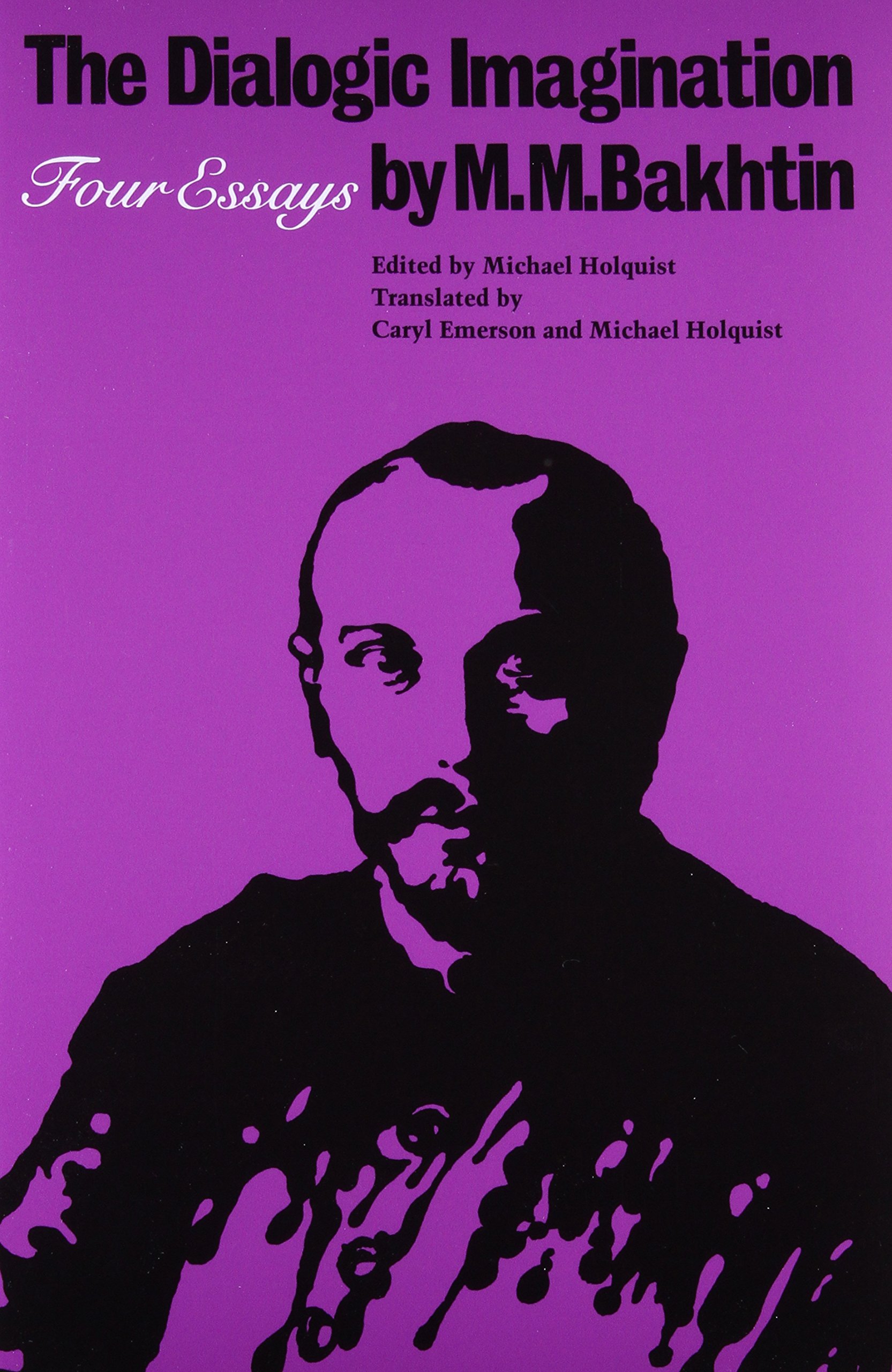
The Dialogic Imagination: Four Essays (University of Texas Press Slavic  Series): Bakhtin, M. M., Holquist, Michael, Emerson, Caryl, Holquist,  Michael: 0884217849726: Amazon.com: Books


Here's another of my old conference papers. This one was presented at the Rhetoric Society of America biennial meeting in 2012. 


Authors, Roles, and Subjects


M. D. Robertson


Mikhail Bakhtin and Michel Foucault present different views of the speaking individual.  Bakhtin’s view suggests that the speaker has a greater degree of freedom than Foucault’s view allows.  Judith Butler’s exploration of the concept of the subject is based on Foucault’s view, but Butler’s concerns about performativity and agency could be addressed more coherently using a notion of the subject that is based on Bakhtin’s view, rather than Foucault’s, and clarified by adding the concept of role.


1. The author in Bakhtin


Michael Holquist, in his introduction to Bakhtin's The Dialogic Imagination, speaks of the phenomenon of language and “that other phenomenon which it ventriloquates, man” (xviii).  This statement suggests that Holquist wants to count Bakhtin among those who say that we do not speak language–language speaks us.


But Bakhtin seems to directly contradict Holquist’s statement when he says, “[The author] speaks, as it were, through language, a language . . . that he merely ventriloquates” (299).  This clearly portrays the author as Edgar Bergen and language as Charlie McCarthy, not vice versa.


Bakhtin’s theory of language is based on the intertwined concepts of dialogism  and heteroglossia.  Against linguistics, stylistics, and the philosophy of language, which all posit unitary and discrete normative national languages and individuals who each speak in exactly one such language (or exactly one deviant version of such a language), Bakhtin asserts that such a view of language is a fictional abstraction.  Actual language in use is always caught in the interplay between “centripetal” forces that tend towards greater standardization of speech, and “centrifugal” forces that tend towards greater diversity of speech.  The latter are stronger, both diachronically and synchronically.  Speakers do not speak a single language, they speak a blend of dialects associated with various elements of society, a blend which varies from one utterance to the next.  Heteroglossia refers to the mixture of interacting languages that compose any identifiable national “language”.  Dialogism means that, in non-poetic uses of language, an individual does not speak in a single language of her own choosing; speech (la parole) will always draw from a mixture of languages (les langues), like a ladle dipped into a pot of stew.


Heteroglossia and dialogism shape the dialect(s) that speakers use, but it is a mistake to infer from this that speakers have no control over what they say in those dialects.  Bakhtin’s discussion of authorship makes this clear.


Bakhtin discusses both poetic and prosaic authorship.  The main difference between them is that the poet resists heteroglossia and centripetal and centrifugal forces that shape language and strives to create a language of his own, while the novelist embraces heteroglossia and uses the existing social dialects that he is aware of.  

In the majority of poetic genres . . . the internal dialogization of discourse is not put to artistic use, it does not enter into the work’s ‘aesthetic object’.  In the novel, however, this internal dialogization becomes one of the most fundamental aspects of prose style and undergoes a specific artistic elaboration. (284)

But in neither case is the author’s intentions determined by the language.

The language of the poet is his language . . . he makes use of each form, each word, each expression . . . as a pure and direct expression of his own intention. (285)

The prose writer makes use of words that are already populated with the social intentions of others and compels them to serve his own new intentions, to serve a second master. (300)

The novelist can be compared to a sailor, who does not control the winds and currents, but is able to harness them and arrive at a destination of his own choosing.

2. The subject in Foucault


Foucault also discusses authorship (broadly construed) in The Archaeology of Knowledge, and he shares Bakhtin’s concern with the concrete use of language in particular social contexts, as opposed to abstract analyses of language. Foucault focuses on “statements”, which he describes but does not define. He distinguishes statements from propositions, sentences, and speech acts; he seems to have in mind roughly what French linguists call “the utterance” (l’énoncé), but with special attention paid to the relationship between the statement and the “subject” of the statement (92), which he distinguishes from the author:

But the “author” is not identical with the subject of the statement; and the relation of production that he has with the formulation is not superposable to the relation that unites the enunciating subject and what he states. . . . .

So it seems that while the author may “produce” language, it is the subject which originates statements.

Unfortunately, Foucault is not altogether clear about what he means by the subject.

Generally speaking, it would seem, at first sight at least, that the subject of the statement is precisely he who has produced the various elements, with the intention of conveying meaning.  Yet things are not so simple. . . . the statements of the novel do not have the same subject when they provide, as if from the outside, the historical and spatial setting of the story, when they describe things as they would be seen by an anonymous, invisible, neutral individual . . . , or when they provide . . . the verbal version of what is silently experienced by a character.  Although the author is the same in each case, . . . . they do not imply the same relation between this subject and what is being stated. (93)

Let it be noted that Bakhtin is able to take these distinctions into account and still show how and in what sense the author is the originator of the novel.  

The following is perhaps the clearest indication of what Foucault means by “subject”:

So the subject of the statement should not be regarded as identical with the author of the formulation. . . . . it is a particular, vacant place that may in fact be filled by different individuals . . . . (95)

Thus, Foucault distinguishes between the individual (the author) and the subject.    The metaphor of subject as place reoccurs in this quotation:

If a proposition, a sentence, a group of signs can be called “statement”, it is not therefore because, one day, someone happened to speak them or put them into some concrete form of writing; it is because the position of the subject can be assigned.  To describe a formulation qua statement does not consist in analyzing the relations between author and what he says (or wanted to say, or said without wanting to); but in determining what position can and must be occupied by any individual if he is to be the subject of it.  (95)

So it seems that statements emanate from positions that individuals occupy, not from individuals themselves.  


3. The subject in Butler


Butler acknowledges her debt to Foucault in her account of the subject, especially his account of assujetissement in Power/Knowledge, History of Sexuality, and Discipline and Punish  (Butler, 16).  According to this account, how an individual comes to occupy a given subject position is a function of the “regulatory power” that is described in Discipline and Punish, or some similar discursively mediated social process, or possibly a set of conflicting processes of opposing powers, but in any case neither the subject nor the statements that emanate from it originate with the individual.   


If this is what Foucault means*, then his theory, and not Bakhtin’s, is the one in which language “ventriloquates” man, or rather, power ventriloquates man.  The subject position, from which statements emanate, is constituted by power relations and imposed upon the individual, unlike Bakhtin’s author, who freely originates his own communicative intentions.


Following Foucault, Butler also distinguishes the subject from the individual.  In her work The Psychic Life of Power, she says,

“The subject” is sometimes bandied about as if it were interchangeable with “the person” or “the individual”.  The genealogy of the subject as a critical category, however, suggests that the subject, rather than be identified strictly with the individual, ought to be designated as a linguistic category, a placeholder, a structure in formation.  Individuals come to occupy the site of the subject . . . and they enjoy intelligibility only to the extent that they are, as it were, first established in language. (11)

She continues to explore the distinction between the subject and the individual further in Gender Trouble.  But in her separation of the individual from the subject, she seems to go farther than Foucault.  Foucault separates the subject from the individual in order to elucidate the social construction of knowledge; it is not clear that he intends to present a metaphysical account of personhood, which seems to be how Butler is construing him.  Butler’s metaphysical construal of  Foucault gets her into difficulties, because she has not clearly worked out the relationship between the individual and the subject:

Paradoxically, no intelligible reference to individuals or their becoming can take place without a prior reference to their status as subjects. (11)

This is only the first of several places in which Butler explicitly or implicitly acknowledges paradox, contradiction, or circularity (logical, temporal, and/or causal) in her account of the subject. 

Butler seems to recognize this conceptual difficulty, but apparently she regards it aporetically.  It complicates the issue of agency for her:

As much as a perspective on the subject requires an evacuation of the first person, a suspension of the “I” in the interests of an analysis of subject formation, so a reassumption of that first-person perspective is compelled by the question of agency.

Agency and the first-person perspective are indeed inseparable.  Any account of the subject or individual that makes its behavior completely determined by impersonal forces, be they biological or social, renders the subject devoid of agency in any ethically relevant sense.  But this is precisely what Butler’s analysis of the subject runs the risk of doing when she makes the subject a position constructed by power relations and paradoxically questions the existence of the individual apart from any subject position.

This unnecessary mystification seems to be motivated partly by her rejection of the metaphysics of substance.  She acknowledges the influence of Michel Haar and others who, expanding on a theme of Nietzsche’s, assert that the metaphysics of substance is an illusion based upon the reification of grammatical categories (GT 28).  But such arguments grossly misrepresent substance metaphysics.  The relationship between language and reality is the very first topic that Aristotle takes up in the very first chapter of the very first work of the corpus that has come down to us (Categories), and he clearly shows that a noun and a substance are not the same thing.


Could there be another account of the subject and the individual that will address the issue of agency without taking on the unnecessary burden of refuting Aristotle and Descartes, and which do not get bogged down in paradoxes?  Bakhtin’s account of the author points the way to an alternative.  I will attempt to sketch such an alternative in the following section.


4. Individuals, roles, and subjects


If the distinction between individual and the subject is retained, then to which of these does the first-person perspective pertain?  Clearly to the former, for it is the individual (i.e., the person, the self, the “I”) that suffers, not some “site” or “position” that the individual occupies.


But different individuals suffer in different ways.  Suffering which is properly called oppression or exploitation does seem to have something to do with the “position” that an individual occupies within a network of social relations.


I think this can be clarified by reexamining the old concept of role.  For the purposes of this argument, I shall define a role as a set of tasks that a particular member of a human community must perform in order to avoid a loss of status.  I shall further define a task as an activity that must be performed in order to meet one or more perceived needs of at least one member of a human community.  Lastly, I propose that a subject can be understood as an individual together with that individual’s role.  


With this in mind, the paradoxes Butler alludes to can be solved by recognizing that the individual is prior to the subject.  Evidence for this can be found in the case histories of pre-linguistic individuals: the Wild Boy of Aveyron, Helen Keller, and Genie the Wild Child.  These individuals were human beings, but for many years they did not lead fully human lives, because they had no roles within any human community.  Thus, they were individuals but they were not subjects.


Bakhtin’s sociolinguistic perspective further elucidates the connections between individuals, roles, and subjects.  It is no coincidence that the individuals who were not subjects were also incapable of communicating.  They had no roles because they could not engage in dialogue.  Here is a way of understanding the “discursive formation of the subject”: individuals cannot assume a role without being informed about the tasks involved in that role through some sort of discourse.  Discourse will also be necessary to communicate to individuals the consequences of assuming or failing to assume certain roles.  


Bakhtin’s concept of heteroglossia can also apply here, for one of the tasks associated with most roles is to speak the social dialect associated with that role, and, conversely, to be a speaker of a given social dialect may involve taking on certain roles.  But Bakhtin’s account of authorship allows the discursive formation of the subject without degenerating into an extreme Whorfianism that would destroy the individual freedom of thought and action that are necessary conditions for agency.


Bakhtin’s centripetal and centrifugal forces also apply to roles.  Roles change over time, just as language does, though I cannot say whether change of language causes, is caused by, or is coincidental to change of roles.


5. Agency and Performativity


Does this account of the subject contribute anything to Butler’s projects?  I believe that it does.


Firstly, it helps make sense of agency.  Butler’s initial account divorced the subject from the “I” but then could not consistently attribute agency to the subject.  I will venture that agency consists of the metaphysical freedom of the individual mediated through the possibilities and constraints inherent in that individual’s role.  Thus, agency can be attributed to the subject (individual + role) without breaking the link between agency and the first person perspective.


Secondly, it supports the concept of performativity without essentialism.  Gender can easily be construed as a kind of role within this framework, and roles are constructs which are never intrinsic to individuals.


Thirdly, it supports the idea of subjection (the process whereby an individual takes on a role) being both subordinating and empowering.  This suggests a way of understanding liberatory projects: oppressed individuals can be liberated by enabling them to either (a) take on different roles, or (b) redefine the roles they already have. 


Fourthly, it ties in with Butler’s idea of an “inassimilable remainder”.  Individuals are prior to and more than the roles that they take on, so an account of their subjecthood can never be a complete account of their personhood.


Finally, it steers between the Scylla of “politically sanctimonious forms of fatalism” and the Charybdis of “naive forms of political optimism” (17) by affirming the freedom of the individual while recognizing the constraints inherent in the roles that individuals are subjected to.


Footnote

* I say "if" because in History of Sexuality, Foucault repeatedly speaks of “the individual constituting himself as a subject”.


Works Cited


Aristotle. Categories.


Bakhtin, Mikhail.  “Discourse in the Novel”, in The Dialogic Imagination, edited by Michael Holquist.  Austin: University of Texas Press, 1981.


Foucault, Michel.  The Archaeology of Knowledge.  New York:  Pantheon Books, 1972. -----Discipline and Punish.  New York: Random House, 1995. -----The History of Sexuality. New York: Random House, 1990.


Butler, Judith.  The Psychic Life of Power.  Stanford: Stanford University Press, 1997. -----Gender Trouble. New York: Routledge, 1990.


New blog: Logos and Liberty

 I've decided to start a new blog on Substack, which I have titled Logos and Liberty . I am doing this for three reasons: first, I want ...